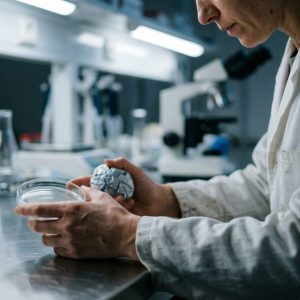
Brain tissue regeneration refers to biological and engineered processes to repair or replace damaged neural tissue, important because it could reduce disability from stroke, traumatic brain injury, and neurodegenerative disease and help preserve cognitive function, independence, and reduce caregiver and health system burdens.
What “regeneration” means in an adult brain
In adult mammals, “regeneration” is rarely a single event like re-growing a severed limb. In the central nervous system, researchers often mean a set of overlapping goals: limiting secondary injury, restoring blood supply and metabolic support, reducing inhibitory scarring, rebuilding myelin, rewiring synapses, and—more rarely—adding new neurons that survive and integrate into existing circuits. The distinction matters because different interventions succeed at different layers of the problem, and improvements in impairment scores do not automatically translate into real-world independence.
Even the most familiar concept—adult neurogenesis—has a narrower and more contested role in humans than in rodent models. Hippocampal neurogenesis in people has been reported as steeply reduced to very low or undetectable levels in adults in some work, while other studies report persistence across aging, with methodological differences in tissue handling and markers likely contributing to discordant findings. The practical takeaway is that “turning neurogenesis back on” is not a settled clinical strategy; much of brain repair research focuses instead on plasticity, remyelination, vascular repair, and immunomodulation. Nature (Sorrells et al., 2018) Cell Stem Cell (Boldrini et al., 2018) Trends in Neurosciences (commentary on the controversy)
For a longevity audience, the framing is slightly different than in acute neurosurgery. Brain tissue regeneration research sits beside the slower work of maintaining “cognitive reserve,” vascular integrity, and inflammation control with age—topics we track in our brain tissue regeneration coverage and in adjacent reporting on regenerative medicine and organ repair.
Key Facts
Adult human hippocampal neurogenesis is debated, with high-profile studies reaching different conclusions
| Fact | Detail |
|---|---|
| Human adult hippocampal neurogenesis remains controversial | One Nature study reported hippocampal neurogenesis drops sharply to undetectable levels in adults, while a Cell Stem Cell study reported persistence throughout aging; differences in tissue processing and markers are a major caveat. |
Extracellular matrix molecules in injury scars can inhibit axon regrowth
| Fact | Detail |
|---|---|
| Chondroitin sulfate proteoglycans (CSPGs) are widely studied inhibitors of neurite outgrowth | CSPG-rich environments are associated with restricted axonal extension after CNS injury; enzymatic CSPG digestion (chondroitinase ABC) promoted axonal regeneration and functional recovery in a rodent spinal cord injury model. |
Glial scarring has a dual role: containment and inhibition
| Fact | Detail |
|---|---|
| Astrocyte-driven scar formation can both protect tissue and impede regrowth | Reviews describe glial scars as forming a barrier that helps limit lesion spread yet also contributes to a growth-inhibitory environment via physical and molecular constraints; the net effect varies by model and timing. |
Stem cell–based interventions for stroke show signals in trials, but evidence quality is limited
| Fact | Detail |
|---|---|
| Clinical evidence for stem cell transplantation in ischemic stroke remains low certainty overall | An updated systematic review of randomized trials found improvements in neurological impairment scales in some studies but uncertain effects on functional outcomes, with many trials small and at higher risk of bias. |
Why translation is hard: circuits, scarring, and “integration”
The main scientific obstacle is not cell survival alone; it is correct integration at scale. Neurons are defined by long-range projections, synapse specificity, and precise timing. After stroke or traumatic injury, surviving networks reorganize; the brain’s “new normal” may be compensatory rather than restorative. Any attempt to add cells or stimulate growth has to contend with miswiring risk, seizures, pain syndromes, and maladaptive plasticity—outcomes that are harder to model in animals than basic histology.
Scarring illustrates the problem. Reactive astrocytes and other cell types build a boundary around damage that can limit inflammatory spread, but injury sites also accumulate inhibitory extracellular matrix molecules and myelin-associated inhibitors that signal axons to stop. The field has therefore moved toward multi-step thinking: temper inflammation early, adjust the extracellular matrix and growth-inhibitory cues, and then pair any structural change with rehabilitation that teaches the nervous system how to use new connections. Neural Regeneration Research (review on astrocyte scar roles) Frontiers in Cellular Neuroscience (reactive astrocytes in CNS injury, 2021)
These mechanisms are not only relevant to trauma. Aging brains experience shifts in immune signaling and vascular function that may alter the same pathways—an overlap that explains why “regenerative” and “anti-aging” narratives sometimes blur. We try to keep the boundary clear in related coverage, including inflammation and aging and biological resilience, because the evidentiary standards and endpoints differ.
Where engineered approaches fit: cells, scaffolds, and molecular switches
Cell-based strategies in the brain are often discussed as if they replace lost neurons directly. In practice, many candidate cell therapies may work (when they work) through paracrine signaling: secreting growth factors, modulating immune responses, and supporting angiogenesis or synaptic remodeling rather than building a fully new circuit. This is one reason early trials can report safety and modest signals on impairment scales without clear evidence of long-term functional restoration.
Biomaterials—hydrogels, fibers, and other scaffolds—aim to change the local physics and chemistry of the injury environment. The logic is that a scaffold can present growth-permissive cues, concentrate factors, and reduce cavity formation, which is common after certain injuries. But the bar remains high: materials must be biocompatible, avoid chronic inflammation, and be deliverable in a way that is realistic for human neurosurgery.
Molecular approaches, including enzymatic editing of extracellular matrix components, have a longer experimental history than many people realize. Chondroitinase ABC, for example, has been used experimentally to degrade inhibitory glycosaminoglycan chains on CSPGs and has been shown to promote axonal regeneration and functional recovery in animal spinal cord injury models. It is not a general “brain regeneration drug,” but it illustrates a repeated theme: removing brakes can be as important as adding growth signals. Nature (Bradbury et al., 2002)
Clinical reality check: what counts as progress in human trials
For stroke and related conditions, the most meaningful clinical endpoints are functional: mobility, activities of daily living, language, and independence. Many regenerative strategies show their first signals on impairment scales (neurological deficit scores), which can improve without a comparable shift in disability or quality of life.
Across randomized trials of stem cell transplantation for ischemic stroke, systematic review evidence suggests possible improvements in neurological impairment measures in some studies, while effects on functional outcomes remain uncertain and the certainty of evidence is low to very low due to trial size and bias concerns. Individual studies also vary widely in cell type, dose, timing (acute vs chronic), and delivery route (intravenous, intra-arterial, intracerebral), which makes “stem cells for stroke” an imprecise category. Cochrane Database of Systematic Reviews (stem cell transplantation for ischemic stroke)
When intracerebral delivery is used, the scientific rationale is direct placement near injury, but it comes with surgical risk and, in some paradigms, immunosuppression. Early-phase studies have focused on feasibility and safety; interpretation should stay aligned with phase I/II goals, not public expectations of reversal. Stroke (phase I study of intracerebral neural stem cell transplantation) Stem Cells Translational Medicine (phase II intracerebral implantation of autologous PBSCs in stroke)
Ethics and misinformation: the predictable failure modes
Brain repair is a magnet for exaggerated claims because the unmet need is real and disability is visible. The most common pattern is a slide from “cells change biomarkers” to “patients will regain lost abilities,” without showing durable functional gains in well-controlled human trials. Another is obscuring the difference between regulated clinical trials and commercial clinics that sell interventions with weak evidence and limited transparency.
When assessing claims, it helps to ask a few concrete questions. Is the result in humans or animals? Is the endpoint functional or a surrogate marker? Is follow-up long enough to detect delayed adverse effects such as tumor formation, aberrant sprouting, seizures, or chronic inflammation? Are methods and conflicts disclosed? A skepticism-first approach is consistent with how we handle other speculative biomedical frontiers, including high-risk aging research and broader discussions in cellular rejuvenation reporting.
What readers can do now (without mistaking it for regeneration)
For individuals focused on preserving cognitive function with age, the strongest evidence still clusters around vascular risk management and rehabilitation principles rather than regenerative procedures. Post-injury, structured rehab and task-specific training remain central because plasticity is activity-dependent; experimental biological interventions, if they reach practice, are likely to be adjuncts rather than replacements for rehab.
For those tracking the science, clinical trial registries and peer-reviewed primary literature remain more reliable than headlines. If an intervention is being marketed directly to consumers for brain regeneration outside of transparent trials and regulated pathways, that should be treated as a signal to slow down and verify.
FAQs
Can the adult human brain regenerate new neurons?
Some evidence supports ongoing neurogenesis in parts of the adult human brain, but hippocampal neurogenesis in adults remains debated, with prominent studies reporting conflicting findings and methodological caveats. Nature (Sorrells et al., 2018) Cell Stem Cell (Boldrini et al., 2018)
Why do axons fail to regrow well after brain or spinal cord injury?
Regrowth is limited by multiple factors, including inhibitory extracellular matrix components associated with scarring (such as CSPGs), myelin-associated inhibitory signals, and a broader injury environment shaped by inflammation and tissue architecture. Nature (Bradbury et al., 2002) Neural Regeneration Research (review)
Are stem cell therapies proven to restore function after stroke?
Randomized trials and systematic reviews suggest possible improvements in neurological impairment in some studies, but effects on functional outcomes remain uncertain and evidence certainty is limited due to small trials and risk of bias. Cochrane Database of Systematic Reviews
What is the role of the glial scar in regeneration?
The glial scar can help contain damage and shape inflammation, but it is also associated with a growth-inhibitory environment that can restrict axon extension; the balance of these effects depends on timing and the specific injury context. Frontiers in Cellular Neuroscience (2021)
How should I evaluate a headline claiming a “brain regeneration breakthrough”?
Check whether the result is in humans, whether outcomes are functional rather than purely biological markers, whether follow-up is long enough to detect delayed harms, and whether the study is peer-reviewed with clear methods and disclosures. Systematic reviews can help calibrate expectations when single studies are noisy. Cochrane Database of Systematic Reviews