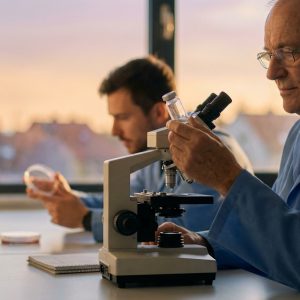
INFLAMMATION AGING, often discussed as inflammaging, refers to persistent, low-grade immune activity that coexists with tissue remodeling across the lifespan. Scientists investigate it through immunology, geroscience, and systems biology to clarify how cellular defense programs intersect with repair, resilience, and age-related disease risk; for broader context, see our biohacking overview of longevity mechanisms related to inflammation.
Innate Sensing Nodes and Transcriptional Programs in Cellular Aging
Innate immune sentinels, like Toll-like receptors (TLRs), NOD-like receptors such as the NLRP3 inflammasome, and cytosolic DNA sensors (cGAS–STING), detect pathogen- and damage-associated patterns. These triggers converge on transcriptional hubs like NF-κB, AP-1, and IRFs, which induce cytokines (for example, IL‑1β, IL‑6, TNF), chemokines, and enzymes for eicosanoid biosynthesis. With age, chronic exposure to cellular debris, advanced glycation end products, ATP, and oxidized lipids enhances these signals and sustains inflammation. Experimental systems use experimental aging models used to study inflammasome and NF‑κB dynamics to better understand these patterns.
Senescence, SASP, and Tissue Microenvironments
Cellular senescence – a state where cells stop dividing but continue messaging – can fuel local and systemic inflammation. The senescence-associated secretory phenotype (SASP) includes cytokines, chemokines, growth factors, and enzymes that attract immune cells and change matrix structure. Different tissues show unique SASP profiles, and the removal or accumulation of senescent cells varies by tissue and health. Mechanistic overviews: senescence-associated secretory phenotype SASP and cellular senescence in aging and cellular aging brakes that constrain runaway inflammatory signaling.
Mitochondrial Dysfunction, DAMPs, and Resolution Biology
Mitochondrial function worsens with age, and problems with cleanup processes (mitophagy) cause increased reactive oxygen species and DNA leakage, activating sensors like cGAS–STING. Autophagy-lysosomal pathways that clean up damaged parts decline with age, prolonging inflammation. The body normally resolves inflammation through lipid mediators, macrophages, and metabolic changes, but these processes weaken over time. Related pathways include AMPK activation and resolution of sterile inflammation in late life, mTOR signaling convergence of nutrient sensing and inflammatory pathways in aging, and exercise-mitochondria-aging interplay and immunometabolic resilience.
Nutrient and Endocrine Cross-Talk with Immune Signaling
Immunometabolism links nutrients and hormones to immune responses. Insulin/IGF‑1, mTOR, and AMPK affect sugar and energy usage, which decide how immune cells behave. Aging tissues often have changed insulin sensitivity, abnormal fat deposits, and new amino acid cues. These changes influence inflammatory pathways. See insulin and IGF‑1 signaling cross-talk with innate immunity during aging, nutrient sensing axes and inflammatory coupling in late life, and transcriptional reprogramming of immune pathways across aging.
Human Evidence, Biomarkers, and Epidemiology
Researchers often track biomarkers like C-reactive protein (CRP), IL‑6, TNF‑α, fibrinogen, leukocyte counts, and nuclear magnetic resonance signals like GlycA. Higher levels are linked with frailty and diseases but these links don’t prove direct causality. Effect sizes differ depending on study differences, ancestry, sex, and other factors. New measures include epigenetic aging markers capturing inflammatory burden, DNA methylation aging signatures linked to immune activation, measuring biological age across systems, and biological aging markers that index systemic inflammation. Studies also look at chronic infections, stress, pollution, sleep issues, and viral exposures as long-term risks of raised inflammation: chronic infections as persistent inflammatory drivers in aging populations, immune stress and aging interactions via neuroendocrine–cytokine cross-talk, air pollution exposure and systemic inflammatory aging risk, sleep pattern irregularity and elevated inflammatory markers in older adults, viral infections and immunosenescence trajectories across the lifespan.
Tissue Contexts and Organ-Level Remodeling
Neuroinflammation can make the brain more vulnerable to disease. See brain tissue regeneration research and microglial inflammation context and Alzheimer’s brain stimulation research and neuroinflammation dialogue. In blood vessels, inflammation, oxidative stress, and fat-driven changes increase heart risk; muscle, cartilage, and tendon tissues are also changed by cytokines and activity level. Organ repair and inflammatory control are discussed in regenerative medicine and organ repair with inflammatory modulation.
Research Modalities, Caveats, and Open Questions
Insights come from lab models, animal studies, and human clinical and observational research. See systems biology network models of inflammaging, RNA profiling and single-cell atlases of aging immunity, and cellular rejuvenation and age reversal news on immune remodeling. Confounding factors, reverse causation, and population differences make it hard to draw firm conclusions. Some anti-inflammatory drugs help with specific diseases but their effect on life extension is not proven.
Why this Matters to People
This overview explains how the body’s own healing and defense system, when always active, can sometimes make us age faster. Think of it like a house alarm that never turns off – over time, even if you’re not in danger, the alarm can wear down your house! Knowing about Inflammation Aging helps us understand why healthy food, enough sleep, and exercise are so important, especially as we get older. This knowledge can inspire us to take small steps, like managing stress or staying active, that stack up to keep us feeling and functioning better every day. When scientists and doctors learn more about this, they might develop new ways to help us stay healthier for longer, so we can keep doing the things we love.
FAQs about Inflammation and Aging
What does inflammaging mean?
It means low-level, long-lasting inflammation that quietly grows as we age, affecting how tissues repair and changing disease risk. More details are in the biohacking overview of longevity mechanisms related to inflammation.
Which biomarkers are most studied in relation to inflammaging?
The best-known markers are CRP, IL-6, and TNF-α; doctors also watch fibrinogen, white cells, and signals like GlycA. See more on epigenetic aging markers capturing inflammatory burden.
Is reducing inflammation proven to extend human lifespan?
There’s no strong evidence that simply lowering inflammation will make people live longer, though it does help with some diseases. Research is ongoing—look up experimental aging models used to study inflammasome and NF‑κB dynamics.
How does cellular senescence contribute to age-related inflammation?
Old cells, called senescent cells, send out chemical signals that summon immune cells and increase inflammation, sometimes causing tissues to age faster. Learn about cellular senescence in aging.
Do infections or environmental exposures accelerate inflammatory aging?
Yes, repeated infections, pollution, and bad sleep can turn up inflammation, but how much depends on many factors. More details in chronic infections as persistent inflammatory drivers in aging populations.
Bibliographic References
- Franceschi, Claudio, et al. «Inflamm-aging: An Evolutionary Perspective on Immunosenescence.» Annals of the New York Academy of Sciences, 2000. Read full article
- Furman, David, et al. «Chronic inflammation in the etiology of disease across the life span.» Nature Medicine, 2019. Read full article